Pickleball Kitchen Rules Explained: Complete Beginner Guide
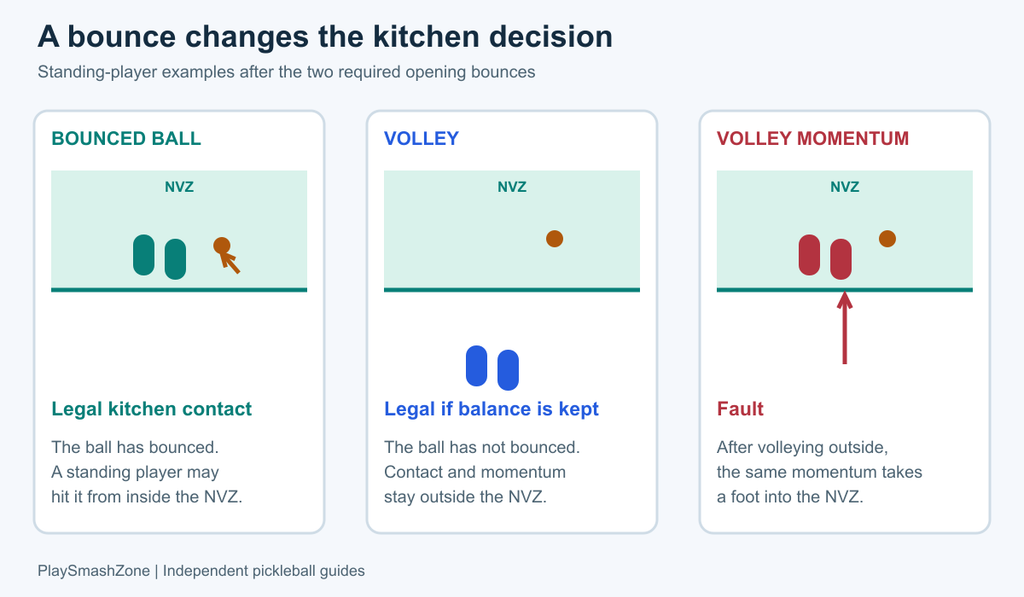
Being in the kitchen is not automatically a fault. You may enter it, stand there and play a ball after it bounces. The restriction concerns a volley: hitting the ball before it bounces, together with the movement that follows that shot.
For a standing player, a foot on the kitchen line during a volley can mean a fault. So can a paddle touching the zone, contact through a partner, or momentum carrying the player into it afterward. Understanding those connections is more useful than simply trying to stay out of the kitchen.
This guide follows the 2026 USA Pickleball Official Rulebook. PlaySmashZone is independent and is not affiliated with or endorsed by USA Pickleball.
What Is the Kitchen in Pickleball?
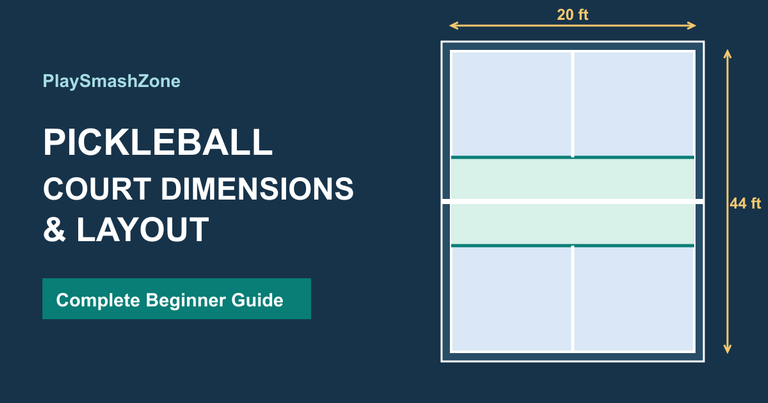
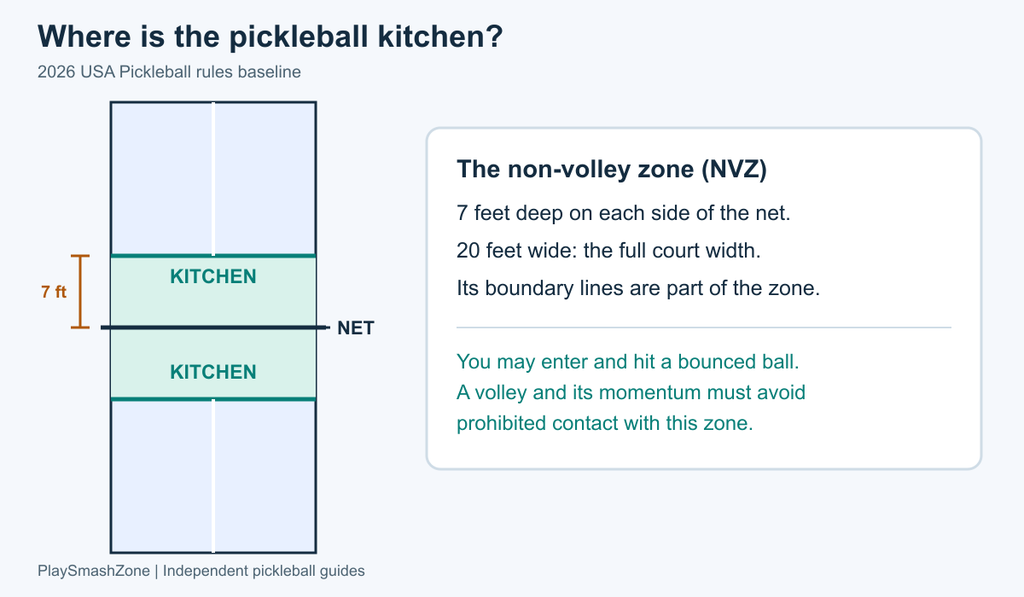
The kitchen is the familiar name for the non-volley zone, usually shortened to NVZ. It stretches across the full 20-foot width of the court and extends 7 feet from the net on each side.
The lines bordering the zone belong to it. If your shoe touches the kitchen line, you are touching the kitchen for the purposes of the volley rules.
The NVZ is an area of the playing surface; it does not extend upward as an invisible wall. Reaching over it is different from touching it. That distinction helps explain why a player can reach forward to volley while staying legally outside the zone.
Why Is There a Non-Volley Zone?
Its practical effect is to keep players from standing immediately beside the net and hitting every ball out of the air. Players must either volley from outside the zone or let a ball bounce before playing it from inside.
You May Stand in the Kitchen and Hit a Bounced Ball
You do not have to wait for the ball to bounce before stepping into the kitchen. You also do not have to leave immediately after playing a shot there.
Suppose a soft shot lands near the net. You step into the kitchen, wait for the bounce and return it. That is legal kitchen contact, provided the rest of the shot follows the rules.
You could already be standing there when the ball arrives. What matters is that you play it after the bounce rather than volley it.
A shot played after a bounce is a groundstroke. A softly played groundstroke near the net is often called a dink. Neither requires your feet to stay outside the kitchen.
Can the Ball Bounce in the Kitchen?
Yes. During a rally, a ball may legally land in the kitchen, including on its boundary lines.
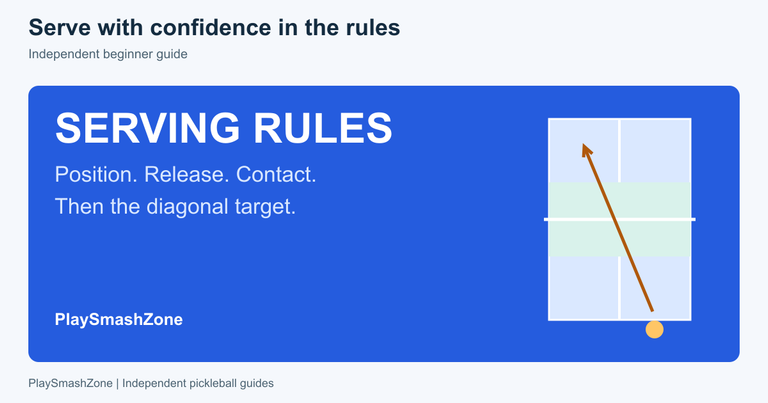
The serve is the important exception: it must land in the diagonally opposite service court, beyond the NVZ. A serve landing in the kitchen or on its line is a service fault. Do not apply that serve-specific restriction to later shots.
When Kitchen Contact Becomes a Fault
Rule 11 connects the restriction to the act of volleying. For a standing player, the main situations are:
- Touching the zone while volleying. A foot, hand or other body part touching the kitchen—including its line—makes the volley a fault.
- Contact through something else. A held paddle, clothing or another object touching both you and the zone can create the same problem. A partner can also be that connection.
- Momentum after the volley. You may hit the ball while outside the kitchen and still commit a fault if the shot’s momentum carries you into prohibited contact afterward.
- Volleying before fully re-establishing yourself outside. After touching the kitchen, both feet must contact the playing surface completely outside it before you volley again.
That last condition matters when moving out of the kitchen. Lifting the foot that was inside is not enough if you volley before both feet have touched down outside.
The Momentum Rule: Ball Contact Is Not the Finish Line
Imagine that you lean forward from outside the kitchen and volley a ball. The shot lands beyond your opponents’ reach, but you are still falling forward. Your next step touches the kitchen line.
That can be a fault even though you struck the ball from a legal position and the rally appeared to be over. Rule 11.A.2 specifically covers volley momentum after the ball becomes dead.
There is no three-second or five-second waiting period. The rulebook defines the end of momentum by the player’s movement: regaining balance and control, or stopping movement toward the NVZ.
Compare these two situations:
- You volley and stumble forward into the zone as part of the same movement: fault.
- You volley, regain balance and control outside the zone, then deliberately walk into it: no kitchen fault from that completed volley.
The elapsed time alone does not decide it. The connection between the volley and the movement does.
What If Your Paddle Touches the Kitchen?
Paddle contact is not automatically a fault in every situation.
If you are holding the paddle and it touches the kitchen during your volley or its follow-through, that is prohibited contact. If you play a bounced ball from the kitchen and the paddle brushes the surface, that contact alone is not an NVZ fault.
A dropped paddle needs a little more context. Rule 10.J makes an exception to its ordinary dropped-item treatment when an item lands in the NVZ as a result of volleying. Losing your paddle during a volley and having it fall into the kitchen is therefore not a way around the kitchen rule.
Separately, Rule 12.B requires you to possess the paddle when it hits the ball. Throwing or releasing the paddle so that it strikes the ball is a paddle-possession fault, regardless of the kitchen.
Can Your Partner Cause a Kitchen Fault?
Yes, if there is the required contact.
Suppose your partner stands in the kitchen. You volley from outside it while holding your partner’s arm. Because you are connected to someone touching the NVZ during your volley, that is a fault against you.
Similarly, if your volley momentum takes you into a partner who is touching the kitchen, the contact can be a fault.
Your partner merely standing in the kitchen does not prevent you from volleying elsewhere. Without contact connecting you to the zone, their position alone is not the problem.
Can You Jump Over the Kitchen?
A jump can be legal, but the takeoff, landing and momentum all matter.
For example, a player might take off from a position established outside the NVZ, volley while airborne and land beyond the sideline outside the kitchen. Avoiding all prohibited NVZ contact can satisfy the kitchen rules. Other rules still apply, including those about the net and crossing its plane.
By contrast, a player who jumps from inside the kitchen and volleys before both feet have touched down outside commits a fault under Rule 11.A.3. Being airborne at contact does not erase the earlier kitchen contact.
Nor is an outside takeoff enough if the volley ends with a landing in the kitchen. The landing is part of the movement you need to consider.
Standing Players, Wheelchair Players and Assistive Devices
The standard two-feet explanation does not apply unchanged to wheelchair players.
Under Rule 25.A.10, a wheelchair’s front smaller wheels and rear stabilizing wheels may touch the NVZ at any time. The large rear wheels remain subject to the volley restrictions. After entering with those wheels, the player must re-establish both large rear wheels on the surface completely outside the zone before volleying.
Wheelchair volley momentum and contact through other objects or a partner also remain subject to Section 25’s specific provisions. A small front wheel touching the kitchen is therefore not, by itself, the same as a standing player’s foot touching it.
For adaptive standing players, assistive devices count as part of the body. A cane or crutch touching the zone during a volley can create an NVZ fault, and the rulebook also addresses momentum-related contact involving those devices (Rule 25.B.2).
Kitchen Myths That Lead to Wrong Calls
| Myth | What to remember instead |
|---|---|
| You can never step into the kitchen. | Entry and standing are allowed; volley-related contact is restricted. |
| The ball cannot bounce there. | It may bounce there during a rally. The serve has a different landing requirement. |
| You must immediately leave after a dink. | There is no immediate-exit requirement. You must establish a legal outside position before a later volley. |
| Only your feet matter. | Equipment, clothing, partner contact and applicable assistive devices can matter too. |
| Once the rally ends, momentum cannot be a fault. | Volley momentum can still produce an NVZ fault after the ball is dead. |
Real Kitchen Examples: Legal or Fault?
These examples assume a standing player and that any required opening bounces have already occurred. “Legal” means no kitchen violation on the stated facts.
| Situation | Outcome | Reason |
|---|---|---|
| Priya waits inside the kitchen and returns a ball after it bounces there. | Legal | She plays a groundstroke. |
| Ben volleys with the edge of his shoe on the NVZ line. | Fault | The line belongs to the zone. |
| Lena volleys outside, then the same forward momentum takes her into the kitchen after the ball is dead. | Fault | The momentum restriction still applies. |
| Omar volleys outside while touching a partner whose foot is in the kitchen. | Fault | Contact through the partner connects him to the zone. |
| Mei exits the kitchen, places both feet fully outside, then volleys and stays balanced there. | Legal | She re-established the required outside position. |
How to Avoid Kitchen Faults
Before reaching for a volley, notice where your feet are and whether you can finish the shot under control. A legal contact position is only part of the movement.
After entering the kitchen for a bounced ball, consciously put both feet down outside before preparing to volley. In doubles, also notice whether helping a partner regain balance would connect the volleying player to the zone.
When deciding a close case, ask three questions: Did the ball bounce? What touched the zone? Was that contact part of the volley or its momentum?
What If Players Disagree?
In ordinary play without a referee, players should call their own and their partner’s faults. The 2026 general rules also allow players to call an opponent’s NVZ fault. The call should be prompt and must precede the next serve.
Under Rule 9.B.3, disagreement between opposing teams about such a fault call means the rally is replayed. Disagreement between partners is resolved in their opponents’ favour. In an officiated match, follow the referee’s procedures.
The PlaySmashZone Pickleball Rule & Fault Checker offers scenario-based explanations for reviewing a rule question. It is an independent aid, not a substitute for the match’s officiating process.
Frequently Asked Questions
Can I stand in the kitchen before the ball bounces?
Yes. Entry is allowed. To hit a ball while touching the kitchen, let that ball bounce first and comply with the other playing rules.
Is the kitchen line in or out?
It is part of the kitchen. A foot on it during a volley is NVZ contact. A serve landing on it is also a fault, although an ordinary rally shot may land there.
Can I reach over the kitchen to volley?
Yes, provided you are legally established outside, avoid prohibited contact and control the volley’s momentum. The NVZ does not extend above the surface.
Can I leave the kitchen with one foot and then volley?
Not if you have yet to put both feet on the surface completely outside it. Both must be re-established outside before that volley.
Can I step into the kitchen after hitting a winner?
Not as a continuation of the volley’s momentum. Regain balance and control outside; a later independent step is a different situation.
On your next rally, focus on the bounce and the finish of the shot. Those two observations explain most kitchen decisions more reliably than “stay out of the kitchen.”